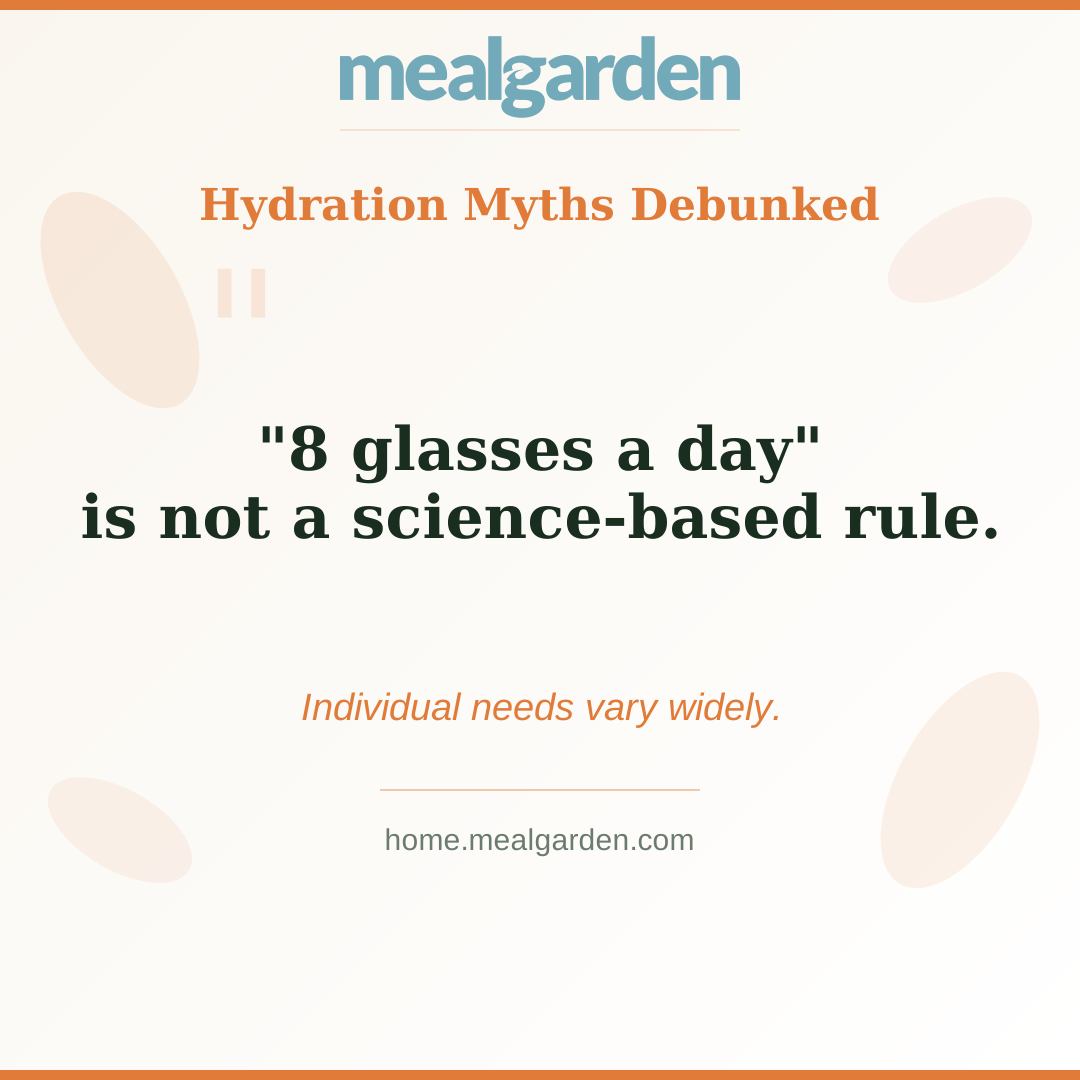
Few health recommendations are as universally repeated — and as poorly evidenced — as "drink eight glasses of water a day." The 8×8 rule (eight 8-ounce glasses, totalling 64oz or ~1.9 litres) has become nutritional folklore. But where did it come from, and does the science support it?
The Origins of "8×8"
Physiologist Heinz Valtin investigated this question in a landmark 2002 paper in the American Journal of Physiology and found no scientific evidence to support the 8×8 recommendation. The rule appears to have originated from a misreading of a 1945 U.S. Food and Nutrition Board report, which stated that adults need about 2.5 litres of water daily — but also noted that "most of this quantity is contained in prepared foods." That critical qualifier was lost in translation.
What Individual Needs Actually Look Like
Daily fluid requirements are genuinely individual and vary based on:
- Body size and lean mass — larger individuals require more
- Physical activity level — sweat losses can reach 1–2L per hour of intense exercise
- Climate and environment — heat and humidity significantly increase needs
- Diet composition — roughly 20% of daily water comes from food (fruits, vegetables, soups)
- Health status — fever, diarrhoea, and certain medications increase requirements
The National Academies of Sciences suggest total daily water intake (from all sources) of approximately 3.7 litres for men and 2.7 litres for women — but emphasize these are averages, not prescriptions.
"Thirst is a sophisticated, well-calibrated physiological signal. For most healthy adults, drinking when thirsty is entirely sufficient."
Reliable Hydration Indicators
Rather than counting glasses, evidence-based indicators of adequate hydration include:
- Urine colour: Pale yellow indicates adequate hydration; dark yellow or amber suggests dehydration
- Thirst: A reliable signal in healthy adults under 65 (older adults have blunted thirst sensation and need to drink proactively)
- Urination frequency: Roughly 6–8 times per day is typically associated with adequate intake
Common Myths Worth Addressing With Clients
- "Coffee dehydrates you" — Mild diuretic effect is offset by fluid content; moderate coffee intake contributes to hydration
- "You need to drink before you're thirsty" — Only relevant during prolonged exercise in heat; thirst is appropriate for everyday life
- "Clear urine is best" — Consistently clear urine can signal overhydration, which carries its own risks (hyponatraemia)
The Dietitian's Role
Individualizing hydration guidance — particularly for older adults, athletes, those with kidney conditions, or clients on diuretics — is an area where personalized dietitian advice genuinely matters. Generic rules can mislead; tailored guidance informs.
Deliver personalized nutrition guidance your clients can trust. Meal Garden helps dietitians build and share evidence-based recommendations with ease.
Reference: Valtin, H. (2002). "Drink at least eight glasses of water a day." Really? Is there scientific evidence for "8 × 8"? American Journal of Physiology – Regulatory, Integrative and Comparative Physiology, 283(5), R993–R1004. https://doi.org/10.1152/ajpregu.00365.2002

Help your clients achieve their results faster
Consumers needs are changing, don't be left behind.
Join today.
Related posts

Iron Absorption: Why Food Combinations Matter as Much as Iron Intake
GI vs. GL: Why Glycemic Load Is the More Useful Clinical Tool