Protein is widely recognized as the most satiating macronutrient — yet most people still pile the majority of their daily protein intake onto dinner. Emerging research suggests this is a significant missed opportunity, both for body composition and metabolic health.
The Science of Muscle Protein Synthesis
Muscle protein synthesis (MPS) — the process by which your body repairs and builds muscle tissue — is directly stimulated by dietary protein. What the research now makes clear is that MPS is not simply a function of total daily protein; the timing and distribution of protein intake matters enormously.
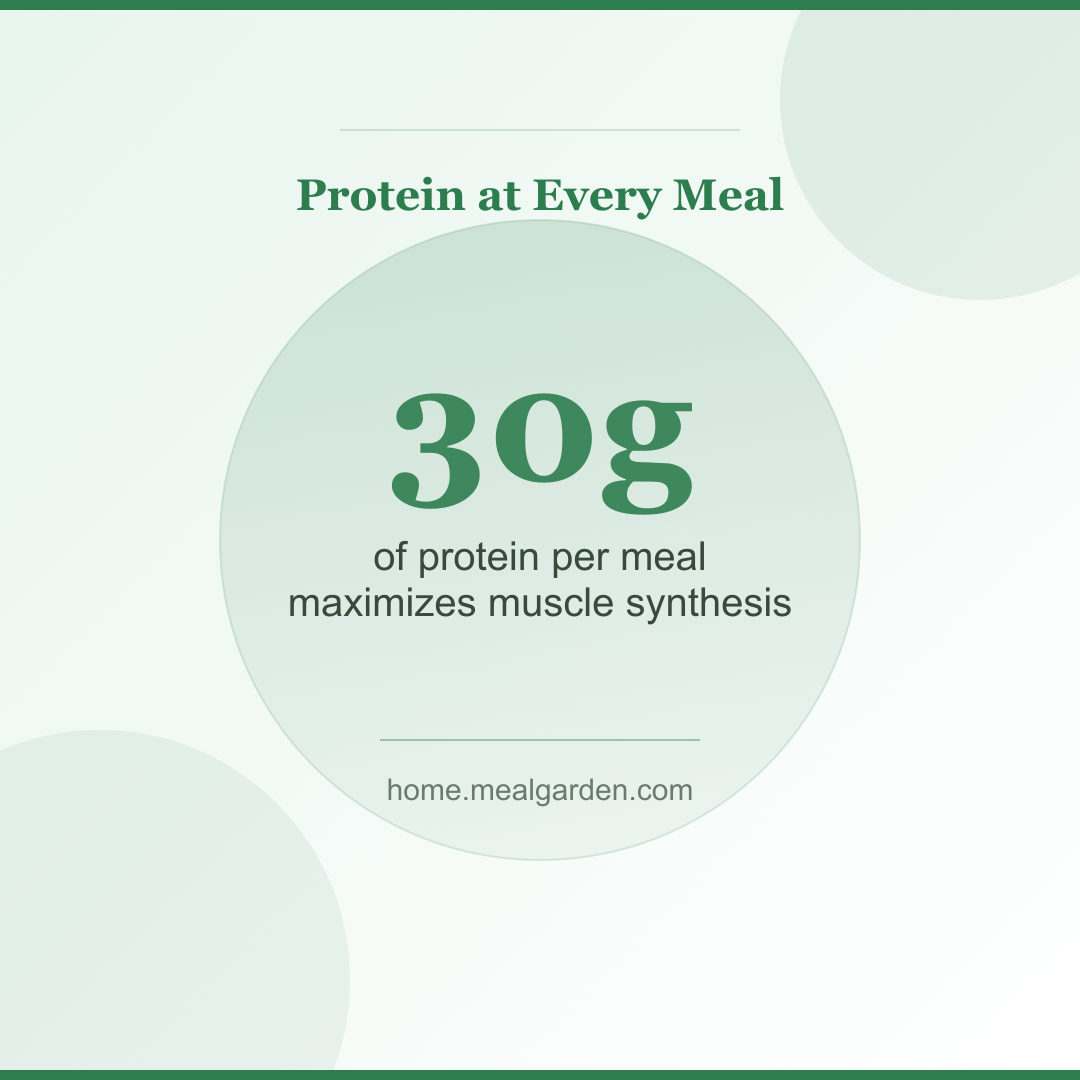
A landmark meta-analysis by Morton et al. (2018) confirmed that consuming approximately 25–30 grams of high-quality protein per meal is the threshold at which MPS is maximally stimulated. Consuming more than this in a single sitting does not proportionally increase MPS — the excess is simply oxidized for energy.
What "Even Distribution" Looks Like in Practice
For a person consuming 90g of protein per day, spreading it as 30g across three meals is significantly more effective for muscle maintenance and satiety than eating 10g at breakfast, 20g at lunch, and 60g at dinner — even though the daily total is identical.
- Breakfast: Eggs, Greek yogurt, cottage cheese, or a protein-rich smoothie
- Lunch: Legumes, canned fish, tofu, tempeh, or chicken
- Dinner: Lean meat, fish, or a complete plant-based protein combination
- Snacks (if needed): Edamame, cheese, hard-boiled eggs, or nuts with Greek yogurt
Why This Matters Beyond the Gym
Even for clients who are not focused on athletic performance, adequate protein at every meal plays a critical role in:
- Preserving lean muscle mass during weight loss
- Reducing appetite and preventing afternoon energy crashes
- Supporting healthy aging — sarcopenia (age-related muscle loss) is closely linked to inadequate protein distribution
- Blood sugar regulation — protein blunts post-meal glucose spikes
"Consuming ~25–30g of high-quality protein per meal maximizes muscle protein synthesis — a pattern most people don't follow."
How Dietitians Can Help Clients Implement This
Conceptually, this is simple. Practically, it requires restructuring deeply ingrained eating habits. Many clients skip breakfast protein entirely, eat light lunches, and compensate with large protein-rich dinners. A skilled dietitian helps clients identify realistic, enjoyable sources of protein at every eating occasion — without making meals feel like a chore.
Meal planning tools like Meal Garden allow practitioners to design and share personalized meal plans that automatically balance protein distribution across the day — making it easy for clients to follow evidence-based recommendations without needing to track every gram themselves.
Want to help your clients hit their protein targets at every meal? Explore Meal Garden — the meal planning platform built for nutrition professionals.
Reference: Morton, R.W. et al. (2018). A systematic review, meta-analysis and meta-regression of the effect of protein supplementation on resistance training-induced gains in muscle mass and strength in healthy adults. British Journal of Sports Medicine, 52(6), 376–384. https://doi.org/10.1136/bjsports-2017-097608

Help your clients achieve their results faster
Consumers needs are changing, don't be left behind.
Join today.
Related posts

Iron Absorption: Why Food Combinations Matter as Much as Iron Intake

GI vs. GL: Why Glycemic Load Is the More Useful Clinical Tool