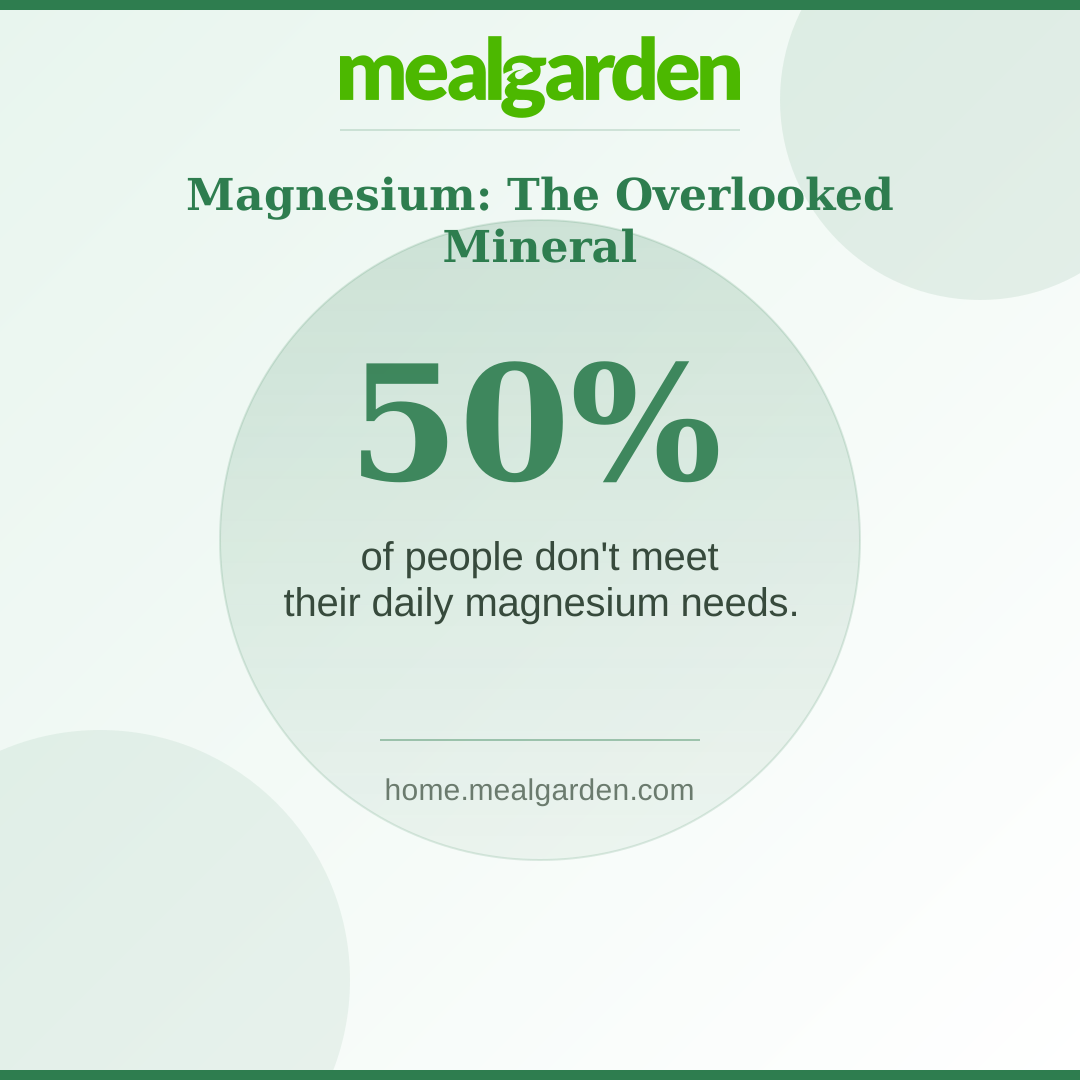
Magnesium participates in over 300 enzymatic reactions in the human body — from DNA synthesis and energy production to nerve transmission and muscle contraction. It is, quite literally, essential to life. Yet surveys consistently find that approximately 50% of adults in the United States do not meet their recommended daily intake.
Why Are So Many People Deficient?
The short answer: the modern diet. Magnesium is found primarily in whole, minimally processed plant foods — leafy greens, legumes, nuts, seeds, and whole grains. As food processing has stripped these from the typical Western diet and replaced them with refined, fortified products, magnesium intake has declined substantially over the past century.
Additional factors include:
- Soil depletion: Industrial farming practices have reduced magnesium content in crops compared to historical levels
- Gastrointestinal absorption issues: Conditions like Crohn's disease and celiac disease impair magnesium absorption
- Medications: Proton pump inhibitors (PPIs), diuretics, and certain antibiotics deplete magnesium
- Excess alcohol: Increases renal excretion of magnesium
Signs and Symptoms of Sub-Optimal Magnesium Status
Clinical magnesium deficiency (hypomagnesaemia) is distinct from the more common sub-optimal status, which may not trigger obvious symptoms but still impairs physiological function. Indicators can include:
- Fatigue and low energy despite adequate sleep
- Muscle cramps, twitches, or restless legs
- Poor sleep quality or insomnia
- Heightened anxiety or irritability
- Headaches or migraines
- Irregular heartbeat (in more severe cases)
"Magnesium is involved in over 300 enzymatic reactions. Sub-optimal intake doesn't cause dramatic deficiency symptoms — it quietly impairs hundreds of biological processes."
Best Dietary Sources
- Pumpkin seeds: 156mg per 28g (37% RDA)
- Dark chocolate (70%+): 64mg per 28g
- Almonds: 80mg per 28g
- Spinach (cooked): 157mg per cup
- Black beans: 120mg per cooked cup
- Avocado: 58mg per fruit
- Whole wheat bread: 23mg per slice
The RDA ranges from 310–420mg/day depending on age and sex. Meeting this through whole foods is achievable but requires intentional food choices in a diet not dominated by ultra-processed products.
Build magnesium-rich, whole-food meal plans for your clients with Meal Garden — the platform dietitians trust.
Reference: Rosanoff, A., Weaver, C.M. & Rude, R.K. (2012). Suboptimal magnesium status in the United States: are the health consequences underestimated? Nutrition Reviews, 70(3), 153–164. https://doi.org/10.1111/j.1753-4887.2011.00465.x

Help your clients achieve their results faster
Consumers needs are changing, don't be left behind.
Join today.
Related posts
Magnesium: The Mineral Half of Us Are Missing

Iron Absorption: Why Food Combinations Matter as Much as Iron Intake